Across Europe, cities are grappling with a shared challenge: how to build greener, more resilient urban environments without sacrificing density or liveability. For many, the answer lies not in sweeping transformations, but in a mosaic of carefully targeted interventions. Small changes that, together, add up to something significant. This is precisely the philosophy at the heart of the GreenDense Interreg North-West Europe project, which brings together six European pilot cities to test and replicate nature-based solutions tailored to their own cultural and environmental contexts.
Bremen, one of Germany's most historic cities, is no stranger to the pressures of urban densification. With sealed surfaces, limited public green space, and growing climate vulnerabilities from heat waves to heavy rainfall, the city has become an important testing ground for innovative green infrastructure approaches. As a GreenDense pilot city, the City of Bremen is drawing on the project's collective expertise and the knowledge of partners including TU Delft and Plante & Cité to design solutions that are practical, people-centred, and scalable.
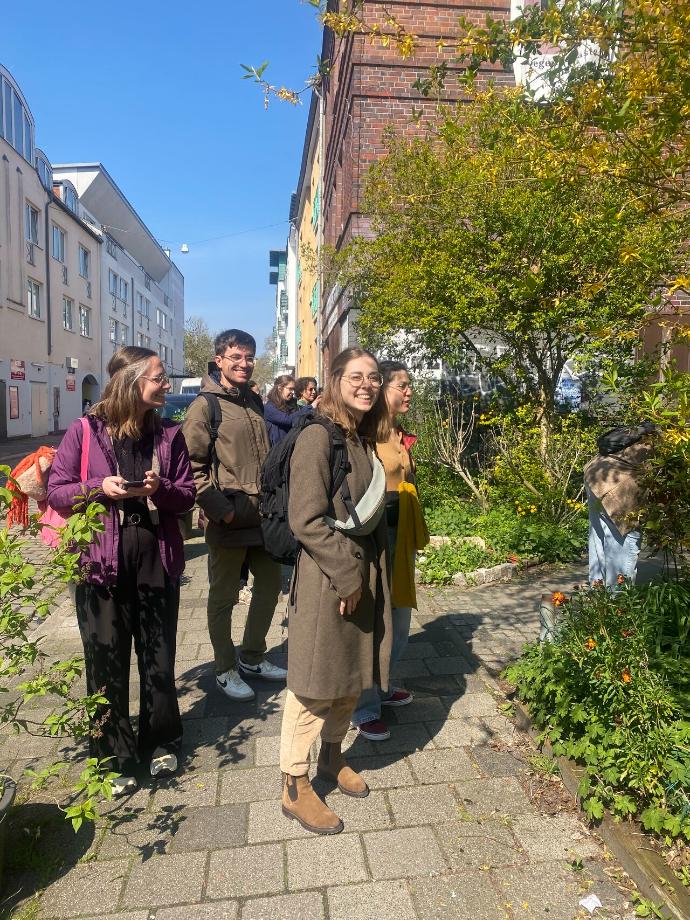
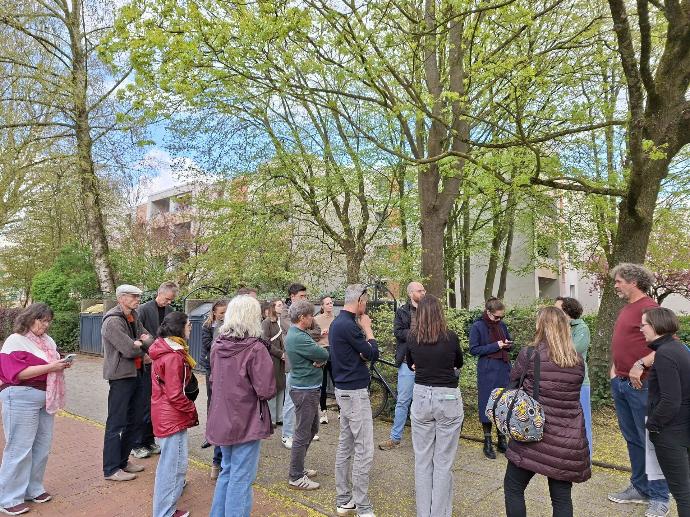
In April 2026, Bremen had the pleasure of welcoming the GreenDense partners for three days of exchange, exploration, and collaborative problem-solving. The visit offered a rich opportunity to explore the city's ongoing greening initiatives, to grapple with the real-world complexities of climate adaptation in dense urban areas, and to learn from one another's experience across Europe.
Day 1: Experiencing Sustainability in Bremen
The first day began at Restaurant Frölichs, a venue committed to organic food and an apt setting for a day centred on sustainability. Partners were welcomed by Christof Voßeler, Head of Climate Adaptation, who provided a compelling overview of Bremen's climate change initiatives. A particular highlight was the introduction to the city's "sponge city" approach: a suite of measures designed to make Bremen more resilient to droughts, heavy rainfall, and heat. This includes a funding programme that supports residents wishing to green their rooftops or unseal private land.
Partners also received an update on the sister project "Biodiverse Cities," which explores how to motivate businesses and citizens to green their properties and contribute to greater biodiversity. The discussion revealed that while residents are often receptive, engaging private companies in voluntary greening remains a persistent challenge.
The afternoon took partners to Kattenturm, a socioeconomically disadvantaged neighbourhood in the southeast of the city. Despite its apparent greenery, many of the spaces that matter most to daily life, such as central squares, main streets, and key intersections, are heavily sealed and offer little shade or nature. A children's playground on Stichnathstraße illustrated this well: surrounded by trees, yet with a sun-exposed, flood-prone play area in urgent need of redesign. Crucially, the planned redesign will actively involve children from different age groups in the neighbourhood.
Kattenturm also highlighted another recurring challenge in urban greening: the prevalence of "semi-private" green spaces. Owned by housing companies and inaccessible to the public, these areas are neither maintained to a high standard nor perceived as belonging to residents. Meanwhile, numerous sealed side-street areas with no functional purpose present clear opportunities for transformation. The proposed response, "micro oases" consisting of clusters of trees, ground-level planting, and benches, encapsulated one of the key lessons of the day: green solutions do not always need to be large-scale. A series of small, interconnected interventions can be implemented far more quickly and can be just as effective.
The day concluded with dinner at the historic Bremer Ratskeller, home to one of Germany's oldest wine cellars, where partners reflected on the day's insights over good conversation.
Days 2 & 3: Urban Greening, Community Action, and Climate Adaptation
The second day turned to Bremen's Neustadt district, a strikingly different urban environment. Dense, historic, and hemmed in by competing demands for space, Neustadt offered the perfect backdrop for a candid discussion about the real tensions cities face when balancing mobility, climate adaptation, and quality of life.
At Delmeplatz, newly planted trees are already beginning to transform the microclimate and improve public space. Yet the project's journey was far from straightforward: during excavation works, workers unexpectedly unearthed an old bunker beneath the street, requiring specialist drilling before planting could continue. It was a vivid reminder of how hidden historical infrastructure can complicate even the most straightforward greening efforts in established urban areas.
The group then visited Delmestraße, a street caught between ecological necessity and neighbourhood interests. With too few trees, many of those remaining in decline, and a future street reorganisation on the horizon, the site raised important questions: how can a single street simultaneously accommodate a new cycling route, meaningful green infrastructure, and existing traffic needs? A citizens' initiative had already taken matters into their own hands by planting trees independently, yet some residents remained concerned about losing parking spaces. The contrasting perspectives brought to life the balancing act that urban greening so often demands.
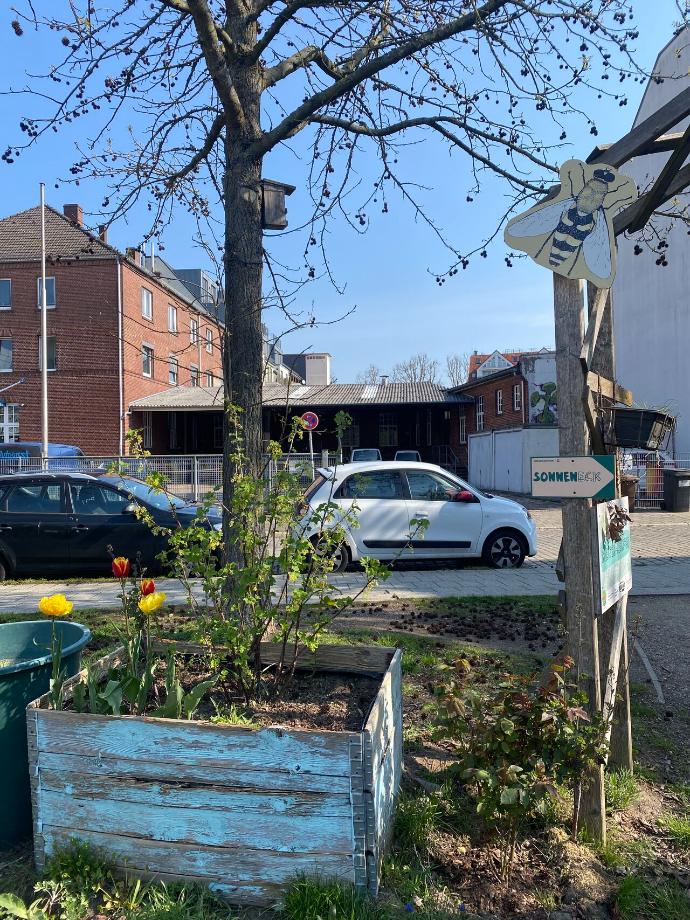
One of the most inspiring stops was Lucie-Flechtmann-Platz, home to the local initiative "Ab geht die Lucie." Founded in 2013 through the collaboration of local residents, a senior citizens' home, and a kindergarten, the project transformed a neglected, heavily sealed square into a flourishing community hub. Through urban gardening, shared planting beds, cultural activities, and sustained voluntary effort, it has become both an ecological and social meeting point and a model for what citizen-led greening can achieve.
The afternoon programme, hosted at the Haus der Wissenschaft, provided time to reflect on the morning's excursions and share comparative perspectives. Partners from Stuttgart presented several of their own urban greening and climate adaptation projects, offering valuable inspiration and opening up productive cross-city dialogue. The day ended with a guided tour of the historic Union Brewery, a fitting tribute to Bremen's industrial and cultural heritage.
The third day brought the programme to Dechanatstraße, one of Bremen's most prominent examples of climate-adapted urban design. Redesigned as a "Klimastraße" (Climate Street), sealed surfaces have been replaced with new trees, ground-level planting, and welcoming public seating areas. The project demonstrates how climate adaptation can do more than manage risk; it can actively improve urban life. The additional vegetation reduces summer heat, absorbs stormwater, and creates a more inviting atmosphere for residents and pedestrians. It is a testament to the idea that resilience and attractiveness are not competing goals, but deeply complementary ones.
Shared Learning for Greener Cities
The three days in Bremen offered far more than a tour of green infrastructure projects. They demonstrated that climate adaptation, at its best, is about improving quality of life, strengthening social cohesion, and creating public spaces that people genuinely want to inhabit. Whether through "micro oases" in Kattenturm, the grassroots energy of "Ab geht die Lucie," or the ambitious redesign of Dechanatstraße, Bremen's approach to urban greening is both pragmatic and deeply human.
The exchange between partners and pilot cities confirmed, once again, that international cooperation and shared learning are among the most powerful tools available to cities working towards a greener, more resilient future. GreenDense is not merely a project; it is a community of practice, and its value grows with every meeting, every site visit, and every conversation that bridges borders.
Article written by Vincent Möller - Die Senatorin für Umwelt, Klima und Wissenschaft, Freie Hansestadt Bremen