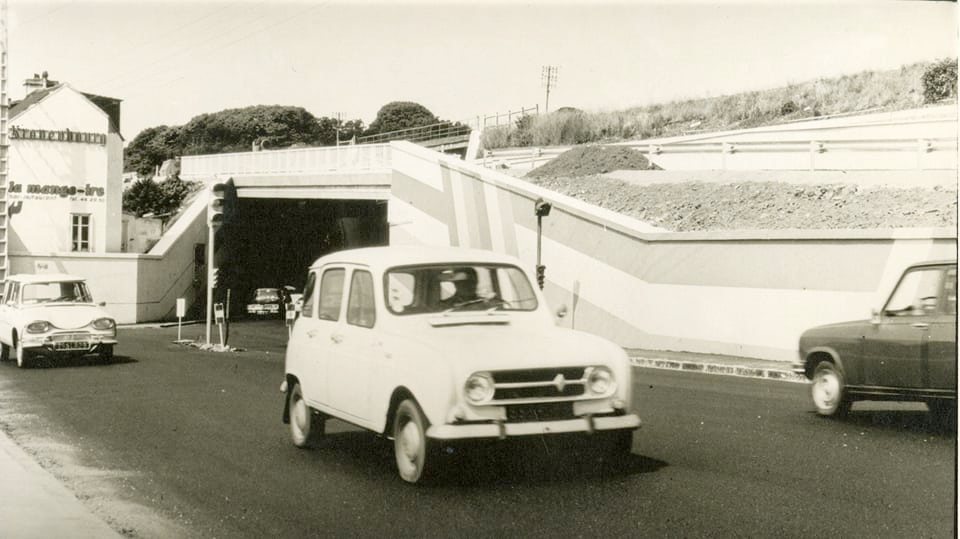
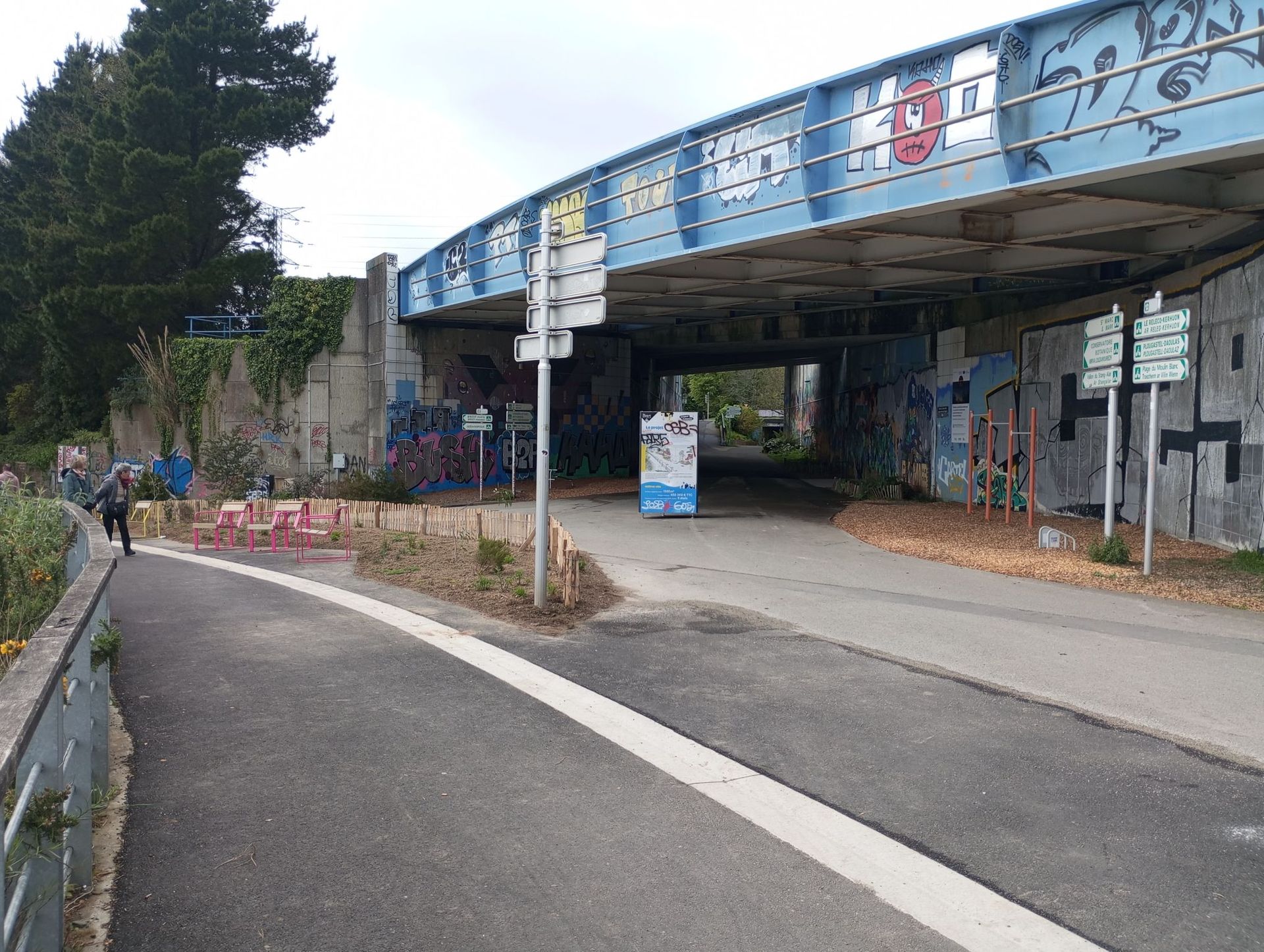
For more than thirty years, Brest’s Palaren Road sat largely forgotten. Once a busy coastal route, it was bypassed when a larger road was built alongside it, leaving this 700-metre stretch of prime real estate - with sweeping views out to sea - without a clear purpose or a clear owner. Pedestrians and cyclists shared the worn tarmac with no separation between them, and wheelchair users were unable to admire the view in its entirety due to changes in the road level.
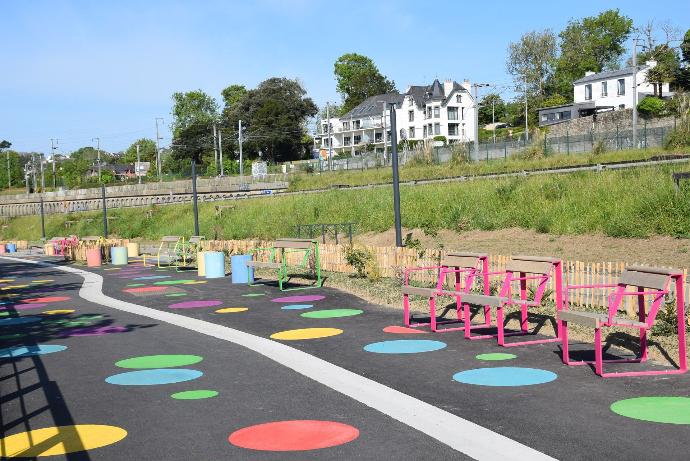
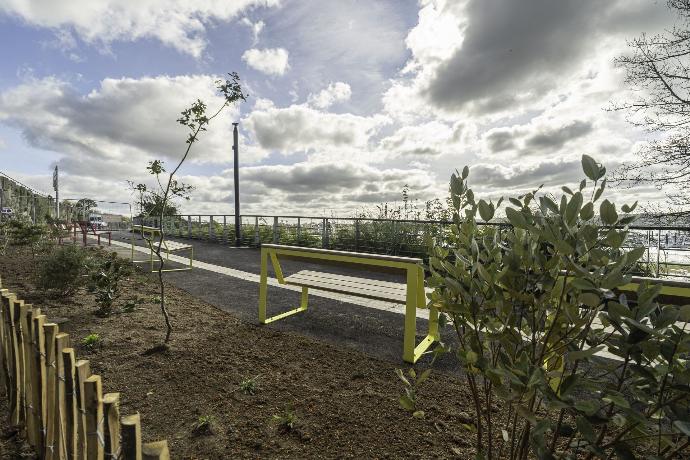
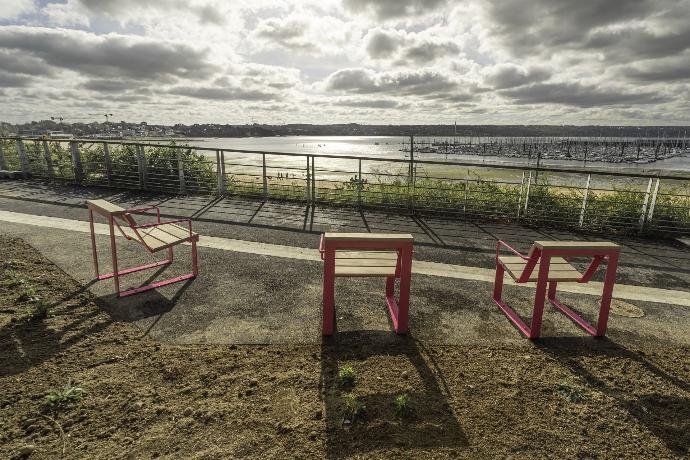
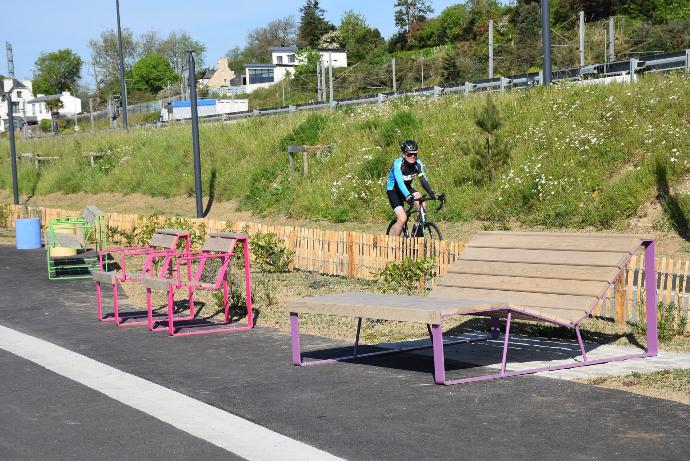
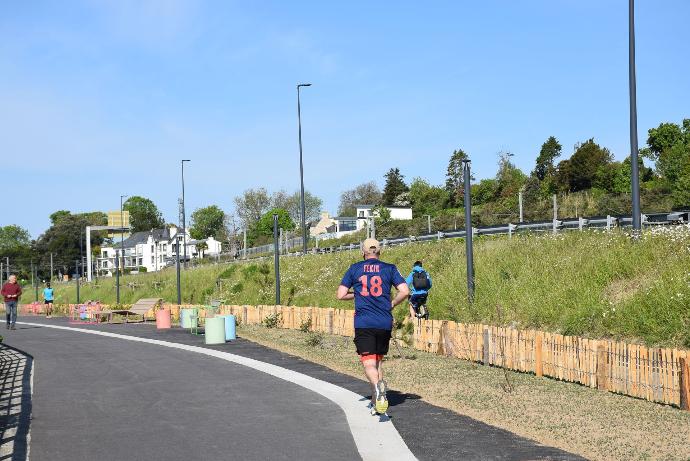
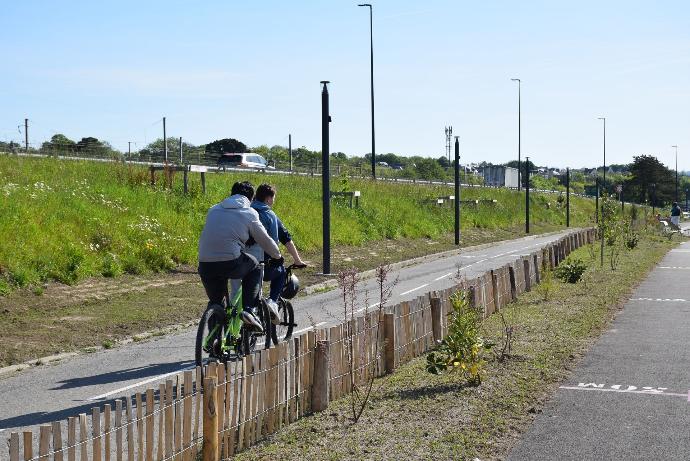
That changed in March 2025, when the Palaren Road pilot site formally opened as part of the GreenDense project - a multipurpose public space with designated cycling and pedestrian lanes, rest areas, an outdoor workout zone, new planting, and 1,500 m² of green space added to the city. We sat down with Paul Bonhomme from Brest Métropole's green spaces team to hear the full story.
A site caught between three territories
Part of what made Palaren Road so difficult to act on was its position. The road connects Brest and Le Relecq-Kerhuon, but is located in a third territory: the city of Guipavas. This meant responsibility for the road and its transformation was split between three cities.
"Even if we had all the money of the three cities combined, we wouldn't have been able to find enough," says Paul. "GreenDense was absolutely necessary to make it happen."
The project provided not just funding but also the framework that made cross-municipal collaboration possible - a reminder of what European investment can unlock in the complex, in-between spaces that fall through the cracks of local governance.
Testing before committing
Before any major works began, the team ran a series of smaller interventions to test the ground. In April 2023, they greened 83 m² at both ends of the road to observe how plants would establish in what is an unusual environment: a coastal site with salty air and unusual soil conditions. A year later, thirty trees were planted in the green strip between the old and new roads, with citizens contributing to this decision through the allocation of Brest Métropole's participatory budget.
Then, in May and June 2024, the team went out to meet users on the site directly - counting footfall, gathering feedback, and asking what people actually needed. The answers were consistent: clearer separation between cyclists and pedestrians, more spaces to rest and play, and more greenery. With those findings in hand, the full design was drawn up in-house by the green spaces team, and works began in September 2025.
What they built - and how
The finished site is designed to be low-maintenance and ecologically experimental. Rather than importing new materials, the team crushed and reused the concrete removed during de-paving, mixing it in equal thirds with normal soil and natural rocks to create a planting substrate that improves water infiltration and reduces the need for costly materials. It is not a typical planting mix - Paul describes it as "poor in fertility" - but that is partly the point. The team wanted to see which species would establish and thrive under challenging coastal conditions without irrigation, and which would not.
Young, small trees were planted rather than the large specimens more commonly used in urban greening projects. "Smaller trees have a less developed root system," Paul explains. "Even without much water, they adapt more easily. We want to see what grows in ten years." Rainwater management was also redesigned: rather than channelling runoff into pipes, the new layout directs water across the green spaces, a principle the team had seen applied in Bremen during a GreenDense partner exchange.
"It was interesting to see that we had the same problems," Paul reflects. "Seeing how other cities manage them helps us think differently."
Throughout the six months of construction, the team maintained a pedestrian path along the full length of the site at all times - a logistical challenge that the Brest team is particularly proud of. Accessibility was also addressed directly: before the works, there was no continuous accessible route for wheelchair users along the seafront. Now there is.
Surprises along the way
Not everything went to plan. In some sections, the team discovered the road was not sitting on solid ground but on a kind of raised structure, with as little as 8 cm of concrete beneath the surface. Workers had to repair and reinforce it, and the design had to be modified to take into account these structural realities. The original target of completing by December 2025 slipped to February 2026 for the road works, and March for the full opening with all planting in place - a modest delay, and one the team had mentally accounted for.
"It was certain we would find some problems," says Paul. "We didn't have many old plans to work from. Every site is different, and every project has to adapt."
Early signs of life
The site has been open for only a few months, but the response has already been very encouraging. The separation between cyclists and pedestrians - the issue residents flagged most consistently in surveys - is already working. The workout equipment is also gaining a lot of visitors, and recently Paul spotted a group of older residents marking out a space on the ground with chalk, apparently preparing for some kind of informal sporting event. Colleagues from the metropolis's sports team are already exploring how to run outdoor sessions that mix physical activity with plant identification.
"Before, it was just a connection - somewhere you passed through," Paul says. "Now it's a place to stop. For everyone, at every pace."
Why the project matters beyond Brest
For GreenDense, Palaren Road is one of the project's most substantial pilot sites, and Paul sees it as a powerful testing ground for the wider project. The reuse of demolished concrete in planting substrates, the use of small pioneer trees in hostile coastal conditions, the approach to passive rainwater management - all of these are experiments that could inform greening projects across Europe. "We'll see in some years if it works," he says. "That's the idea - to test things here so others can learn from them too."
Brest itself offers a useful lens on public appetite for this kind of change. The city was almost entirely destroyed during the Second World War and rebuilt rapidly around the car, leaving it with an urban landscape that was largely dominated by concrete. In the metropolis's participatory budget process - run every two years for the past decade - more than 50% of all citizen-submitted projects have called for the creation of new green spaces, with 70% of all projects having some connection to greening. "People want green spaces," says Paul. "They want a greener city. The demand is there."
Advice for other cities
For cities considering something similar, Paul's advice is straightforward: invest in the participatory process before you invest in the works. On Palaren Road, the team met stakeholders from the neighbouring port, aquarium, nautical centre and swimming club, and collaborated with Brest's botanical conservatory on species selection. They counted users, conducted surveys, and listened carefully before developing the precise plans for the project.
Equally important, he says, is being clear from the outset about who will maintain the space and how - and understanding the real uses of a site before deciding how much space to dedicate to each. "If we hadn't taken cyclists into account, we could have had more green space. But we wouldn't have fixed the central problem, and the project wouldn't have worked for the people who use it most."
Palaren Road's maintenance will be handled by the city's own gardeners, keeping the approach deliberately light. The plants that survive, survive. The ones that don't will be replaced with something better suited. It is, in the end, the same spirit that shapes the whole GreenDense project: test, observe, adapt - and build something that lasts.