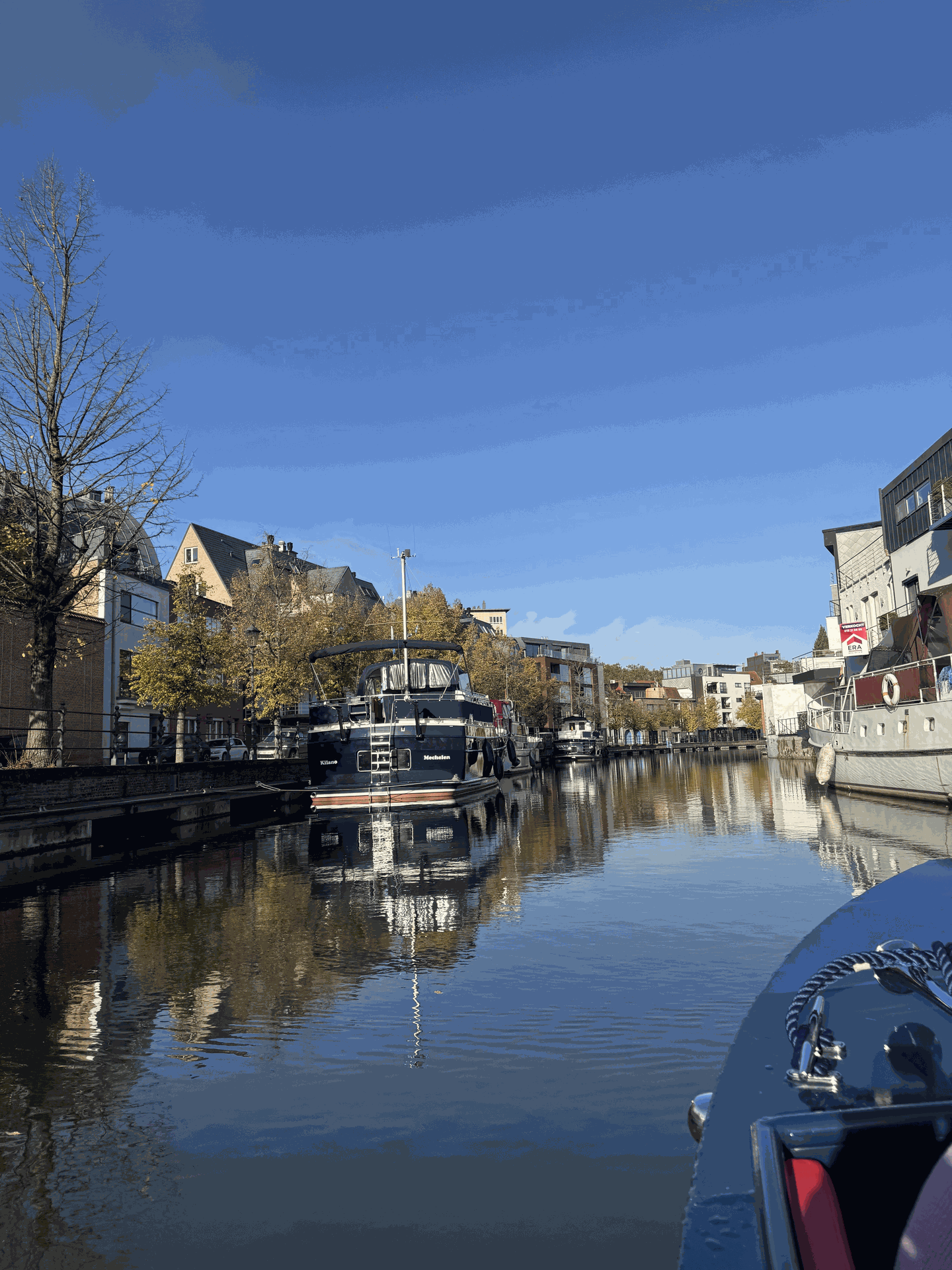
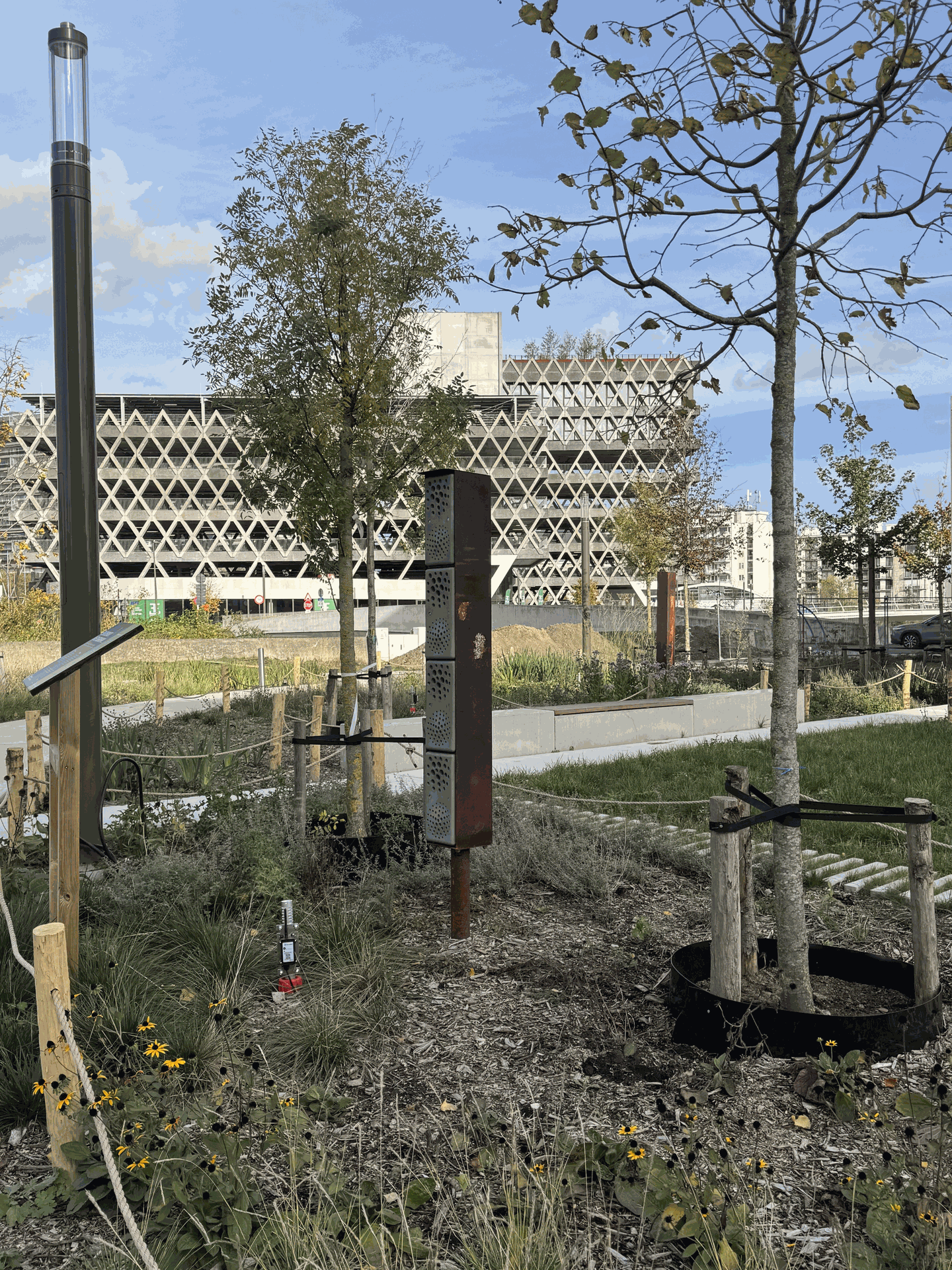
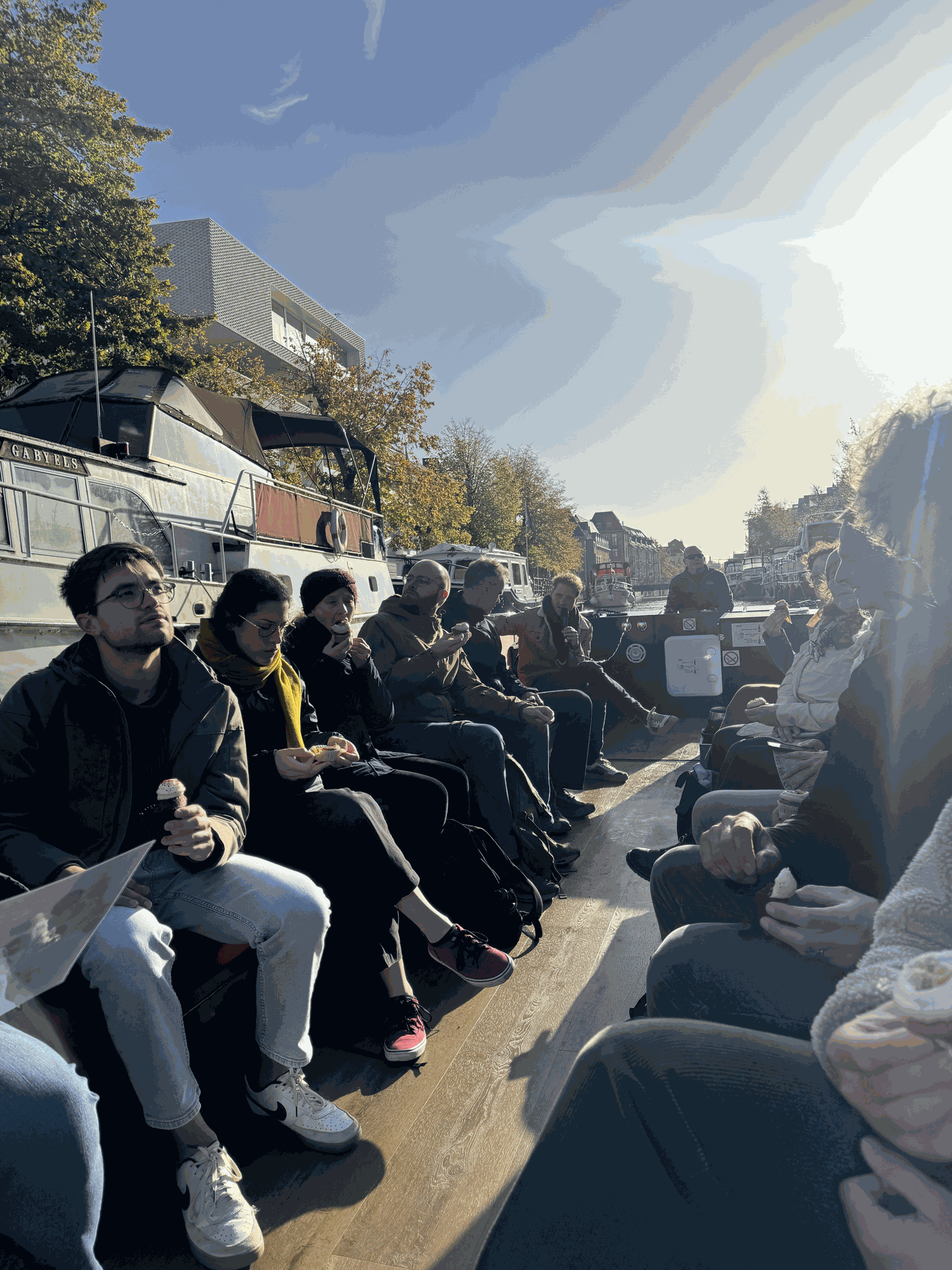
On 27 and 28 October 2026, the GreenDense partners met in Mechelen for a two-day deep dive. The programme combined presentations from the city’s teams with a workshop, a GreenDense Clinic and updates from each pilot city. It closed with a first test of the GreenDense Academy.
Day 1: Climate Adaptation, from Street to Wetland
Partners were welcomed at Het Predikheren, the public library housed in a former Dominican monastery. Arnout Ruelens, head of Mechelen’s Climate and Nature team, outlined how the city’s climate work grew from mitigation to include adaptation, greening and the circular economy. His main lesson was that “capacity follows vision”. He also showed how citizen science helped the city see where people were most exposed to heat, and how listening changes outcomes: on one shopping street, a proposal for two trees met objections about parking. After two or three sessions with residents, it grew to 20 trees.
The team then presented Wetlands4Cities, a LIFE project restoring 320 hectares of wetland and reconnecting the city’s streets to the valleys around it. In several streets, roof water now feeds planting beds and underground infiltration before reaching the wetlands. Residents contribute through garden monitoring, home visits from a water adviser and a street bingo that introduces features of new streets that are easy to miss.
In the afternoon, Plante & Cité led a workshop on a common pilot acceptance survey. Partners proposed ten shared questions on use, opinions and perceptions, which each city can supplement with its own. The survey will be short, written in plain language and open to children and young people, with online and paper versions. German, Dutch and French translations will be tested locally before it opens.
The GreenDense Clinic looked at Uitbreek Doorbraak, the renewal of a main entrance road to the city centre, which combines sewer renewal with more than 1,500 m² of planned green infrastructure. A month of consultation, including an illustrator who recorded feedback visually, showed residents how their comments had been read. Of those who commented on the draft design, 60% were satisfied and 20% dissatisfied.
Day 2: Giving the River a Voice
Mark Vanderveken of the City of Mechelen described how a citizens’ assembly, selected by lottery, helped shape the future of the Binnendijle. Participants received persona cards for 15 species and considered the river from the perspective of a bat or a fish, producing more than 100 recommendations. One asked designers to shape the quay walls so that duck families could find shelter. His advice to partners was to begin with a walk on site, measure views at the outset and report back, so residents can see whether their contribution reached the design brief.
Hans Gijsbrechts, also of the City of Mechelen, introduced Waterland Wonderen, a cross-border Interreg project exploring how to help people experience wetlands while protecting them. A proposed observation tower did not receive a permit, and the team is now looking at smaller installations in less sensitive locations.
TU Delft closed the meeting by introducing the combined GreenDense Academy and Ambassador Training. Partners tested the format by revisiting a local project question through three perspectives: people and place (STIPO), systems and patterns (TU Delft) and maintenance and design (Plante & Cité). Partners asked for short subtitled videos and a facilitator guide so cities can adapt the exercises locally. Internal city sessions will take place in the first half of 2027, followed by an open online session around September 2027.
Shared Learning
Across both days, the same points kept returning:
- Small, early actions give residents a practical way in.
- Consultation works best when it starts on site and when people see how their input was used.
- Maintenance teams and local owners need a place at the table from the start.
These lessons will feed into the survey, the Academy and the wider GreenDense toolkit, which we are excited to share with you soon.